Emaar's US$55 billion Dubai district: what could it mean for investors?
A new urban district for almost 150,000 residents, announced without a confirmed site. What is known, what is speculation, and what a serious buyer should be doing while the details are still to come.
· 7 min read · Exclusively Off Plan
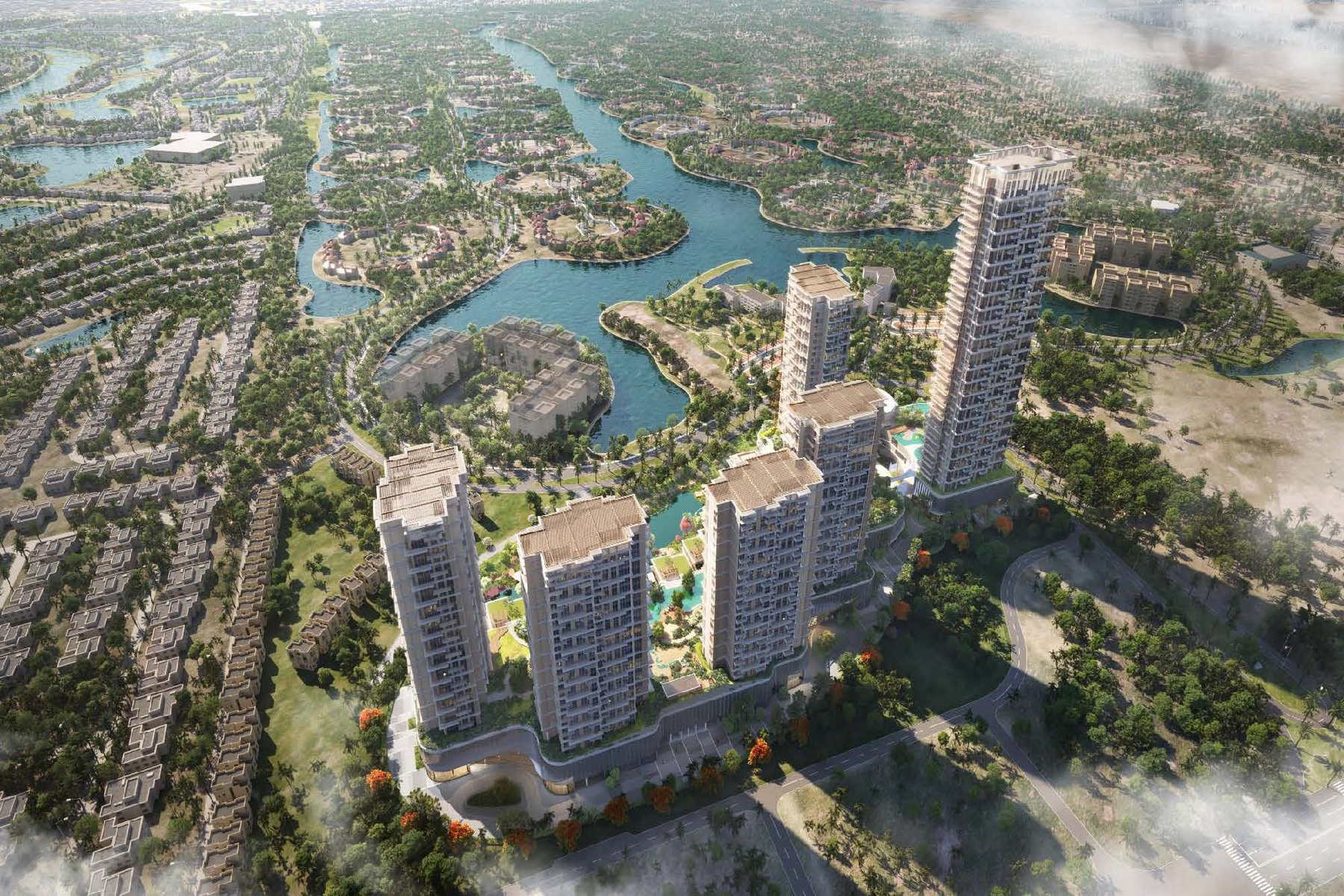
Dubai has never been a city that thinks small. In June 2026, Emaar announced plans for what it describes as its most ambitious masterplan to date: a new urban district of roughly AED 200 billion (US$55 billion) designed to accommodate almost 150,000 residents.
This is not simply another residential launch. The development is expected to cover more than 4.5 million square metres of built-up area and to combine residential towers, villas, offices, retail, hospitality, extensive landscaping and community infrastructure in one integrated district.
For investors, an announcement of this scale raises obvious questions. Where will it be? When will properties launch? What could it mean for surrounding communities? And should buyers be positioning themselves ahead of the next major Emaar growth story? Sensible questions, all of them, and for now they need some patience.
What has been announced
Emaar has described the project as a future-ready, self-sustaining urban district rather than a residential community. The initial masterplan points to residential towers, resort-style villas, commercial and office space, retail destinations, extensive green and blue landscapes, smart urban technology, integrated lifestyle amenities and community infrastructure.
The intent is integrated urban living, with residential, commercial and lifestyle needs planned together rather than developed independently. That model matters. Some of Dubai's strongest-performing communities have shown that long-term value is not created by individual buildings alone. It comes from the quality of the wider destination around them.
Where will it be?
This is the biggest unanswered question. Emaar has described the development as being in the heart of Dubai, designed to offer views towards landmarks including Burj Khalifa, Burj Al Arab and Palm Jumeirah. At the time of writing, the exact site has not been formally confirmed.
That matters for investors. There is considerable speculation about possible locations, but until Emaar identifies the site, any claim about exactly where it will sit, or which existing communities will benefit, remains speculation. Separating confirmed information from launch excitement is where serious buyers earn their returns.
Why the announcement is significant
The scale alone is noteworthy. More telling is what it says about Emaar's confidence in Dubai's long-term growth. The announcement came in a year when the wider market has become more measured and geopolitical uncertainty has influenced some international sentiment. Yet Emaar is committing to a masterplan measured in generations of development, not individual buildings.
Emaar entered 2026 from a position of strength: its UAE development business recorded property sales of AED 20.1 billion in the first quarter, up 22% year on year, with a UAE development revenue backlog of AED 143.3 billion. The announcement is another indication of the scale at which Dubai's major developers continue to plan for future population, business and investment growth.
What it could mean for nearby prices
Large masterplans have an effect well beyond their own boundaries. When a major developer creates an entire district, the surrounding area can gain infrastructure investment, road connectivity, retail and hospitality, schools and community facilities, public space, employment, population and buyer awareness. Over time those improvements can support values in neighbouring communities, and Dubai has seen the pattern repeatedly as once-peripheral areas became established investment locations.
That does not mean every property near the new district will appreciate. The eventual effect will depend on the confirmed location, infrastructure connections, phasing, competing supply and the quality of the surrounding communities. Until those details are released, predicting specific price movements would be premature.
Could early buyers have an advantage?
Potentially, but early does not always mean better. Entering a high-quality masterplan in its early stages can capture appreciation as infrastructure, amenities and population develop, and early phases sometimes offer greater unit choice, preferred positions within the masterplan, introductory pricing, developer incentives and flexible payment plans.
Look beyond launch-day demand, though. A district designed for 150,000 residents will be developed over a considerable period, and different phases, property types and positions within the same masterplan will perform very differently. The objective is not to secure a property in the new district. It is to secure the right property within it.
The Emaar factor
Developer reputation matters most when assessing an early-stage masterplan. Emaar's record includes some of Dubai's most internationally recognised destinations, among them Downtown Dubai, Dubai Hills Estate and Dubai Creek Harbour, and its brand carries international recognition that influences both initial demand and future resale liquidity.
Even so, every opportunity should be assessed on its own terms. Developer reputation should form part of due diligence, not replace it.
Is it a good investment?
It is too early to say, and that is the most useful thing a buyer can take from the announcement. Still unknown are the exact location, individual project positioning, launch prices, price per square foot, payment structures, property mix, service charges, handover schedules, infrastructure phasing and future competing supply. Only when those are available can individual opportunities be properly evaluated. A US$55 billion masterplan can create enormous potential, but scale alone does not guarantee a return. The individual property still has to make financial sense.
What to do now
Rather than making assumptions about a project that has not launched, use this period to prepare: your budget, investment timeframe, preferred property type, expected rental return, capital growth objectives, financing position and risk appetite.
It is also worth speaking with an off plan advisor before launch activity begins. An independent Investment Advisor is not tied to one developer. If the eventual Emaar opportunity suits your strategy, it can be considered. If another masterplan, community or developer offers stronger fundamentals for your objectives, that belongs in the same conversation.
Look beyond the launch to the masterplan
The announcement matters because it shows how Dubai continues to plan beyond the immediate property cycle. A district for 150,000 residents is not designed around the next quarter or the next year. It is part of a much longer vision for how the city will grow, where people will live and how new centres of business and lifestyle will emerge.
For investors that creates opportunity, and it makes careful selection essential. Our role is to help you look past launch excitement and evaluate the fundamentals: developer, location, pricing, payment plan, infrastructure, supply, rental potential and long-term exit. As further information on the district becomes available, those fundamentals will decide whether the opportunity is right for you. The announcement is exciting. The decision should still be considered.